Curated starting points
Find a Bali journey that feels like yours.
Begin with a thoughtfully paced itinerary, then change the stays, experiences, route, and budget with a Tripstor specialist.

Bali is an Indonesian island destination that Indian travelers can visit on a Visa on Arrival, making entry straightforward for passport holders from Mumbai, Delhi, Bangalore, and other major cities. A standard Bali trip runs 5 nights and 6 days, covering areas like Seminyak, Ubud, and Kuta depending on the itinerary.
Packages for Bali start at approximately ₹45,000 per person, with pricing varying based on hotel category, travel season, and inclusions. The best time to visit Bali from India is April through October, when rainfall is low and outdoor activities are fully operational.
Bali suits couples, families, and groups of friends equally well. The island offers beach stays, rice terrace walks, temple visits, and water sports within a compact geography. Most Indian travelers find the food options accessible, with vegetarian meals available across tourist areas. Tripstor customizes Bali itineraries based on departure city, travel dates, and group size.
Curated starting points
Begin with a thoughtfully paced itinerary, then change the stays, experiences, route, and budget with a Tripstor specialist.
Starting from
₹45,000/ person
Depart from India
Explore thoughtfully planned routes with flights, stays, and experiences shaped around your departure city.
Destination guide
Practical context, local highlights, and honest planning advice — written for travellers from India.
Your field notes
A considered guide to Bali
Bali is an Indonesian island destination that combines beach stays, Hindu temple visits, and rice terrace walks within a 5-night itinerary. Indian travelers choose Bali because visa on arrival is available, direct and one-stop flights operate from major Indian cities, and packages start at ₹45,000.
Bali, the island province of Indonesia, sits roughly 5 to 6 hours by air from most Indian metro cities. The island covers approximately 5,780 square kilometres and is divided into distinct travel zones. Seminyak is a coastal area in south Bali known for beach clubs and restaurants. Ubud is a highland town in central Bali known for rice terraces, art markets, and temples. Nusa Dua is a resort enclave in south Bali known for luxury hotels and calm beaches.
Indian travelers pick Bali over other Southeast Asian destinations for three practical reasons. First, visa on arrival for Indian passport holders costs USD 35 and is issued at Ngurah Rai International Airport on arrival. Second, flights from Mumbai, Delhi, and Bangalore connect to Bali via Singapore, Kuala Lumpur, or directly on select carriers. Third, the price-to-experience ratio is high — a 5-night package including flights, hotel, and transfers starts at ₹45,000 per person from India.
The cultural draw is also significant for Indian travelers. Bali follows a Hindu-majority tradition called Agama Hindu Dharma, which shares roots with Indian Hinduism. Temples such as Tanah Lot and Uluwatu are active places of worship, not just tourist sites. This familiarity makes Bali comfortable for first-time international travelers from India.
The best time to visit Bali from India is April to October, which is Bali's dry season. During this period, rainfall is low, outdoor activities are fully operational, and beach and temple visits are uninterrupted. July and August are peak months with higher hotel rates.
Bali's dry season runs from April to October, with average monthly rainfall below 100 mm from June through August. Temperatures across the dry season stay between 26°C and 32°C. This period is the most reliable for outdoor activities including rice terrace walks in Ubud, cliff-top temple visits at Uluwatu, and water sports in Nusa Dua.
Month | Season | Average Rainfall (mm) | Accommodation + Flight Price Premium vs. Off-Season Baseline | Suitability for Indian Travelers |
|---|---|---|---|---|
April | Dry season start | ~90 mm | Moderate (+10–15%) | Good — school holidays align in some states |
May | Dry season | ~50 mm | Low (+5%) | Very good — fewer crowds, stable weather |
June | Dry season | ~35 mm | Moderate (+10%) | Very good — post-summer school holiday travel |
July–August | Peak dry season | ~20–30 mm | High (+25–35%) | Popular but expensive — book 60–90 days ahead |
September–October | Late dry season | ~40–70 mm | Low to moderate (+5–10%) | Good — Dussehra and Diwali travel window |
November–March | Wet season | ~150–300 mm | Baseline (lowest prices) | Acceptable for budget travel; some outdoor activities limited |
Indian long weekends and school holidays in May, June, and October align well with Bali's dry season. Travelers departing during Dussehra or Diwali breaks in October can still find dry-season conditions in Bali. Booking flights and hotels at least 60 days in advance is advisable for July and August departures from any Indian city.
A standard 5-night 6-day Bali itinerary for Indian travelers covers arrival in Seminyak or Kuta, a day trip to Ubud for rice terraces and temples, a visit to Tanah Lot or Uluwatu, beach time in Nusa Dua or Seminyak, and optional water sports before departure.
Ngurah Rai International Airport is Bali's main airport, located 13 km from Seminyak. Travelers collect visa on arrival, clear immigration, and transfer to the hotel. Most flights from India arrive in the afternoon or evening. Day 1 is typically a rest and orientation day.
Ubud is a highland town in central Bali, approximately 35 km from Seminyak. Travelers visit the Tegallalang Rice Terrace, a UNESCO-recognised agricultural landscape of stepped paddy fields. The Sacred Monkey Forest Sanctuary in Ubud is a nature reserve housing over 700 long-tailed macaques. An Ubud day trip takes 8 to 10 hours including travel time.
Tanah Lot is a sea temple in west Bali, built on a rock formation roughly 300 metres offshore. Tanah Lot is most visited at sunset, when the temple silhouette is visible against the horizon. The drive from Seminyak to Tanah Lot takes approximately 45 minutes. Evenings can be spent at Seminyak Beach or at a beach club in the area.
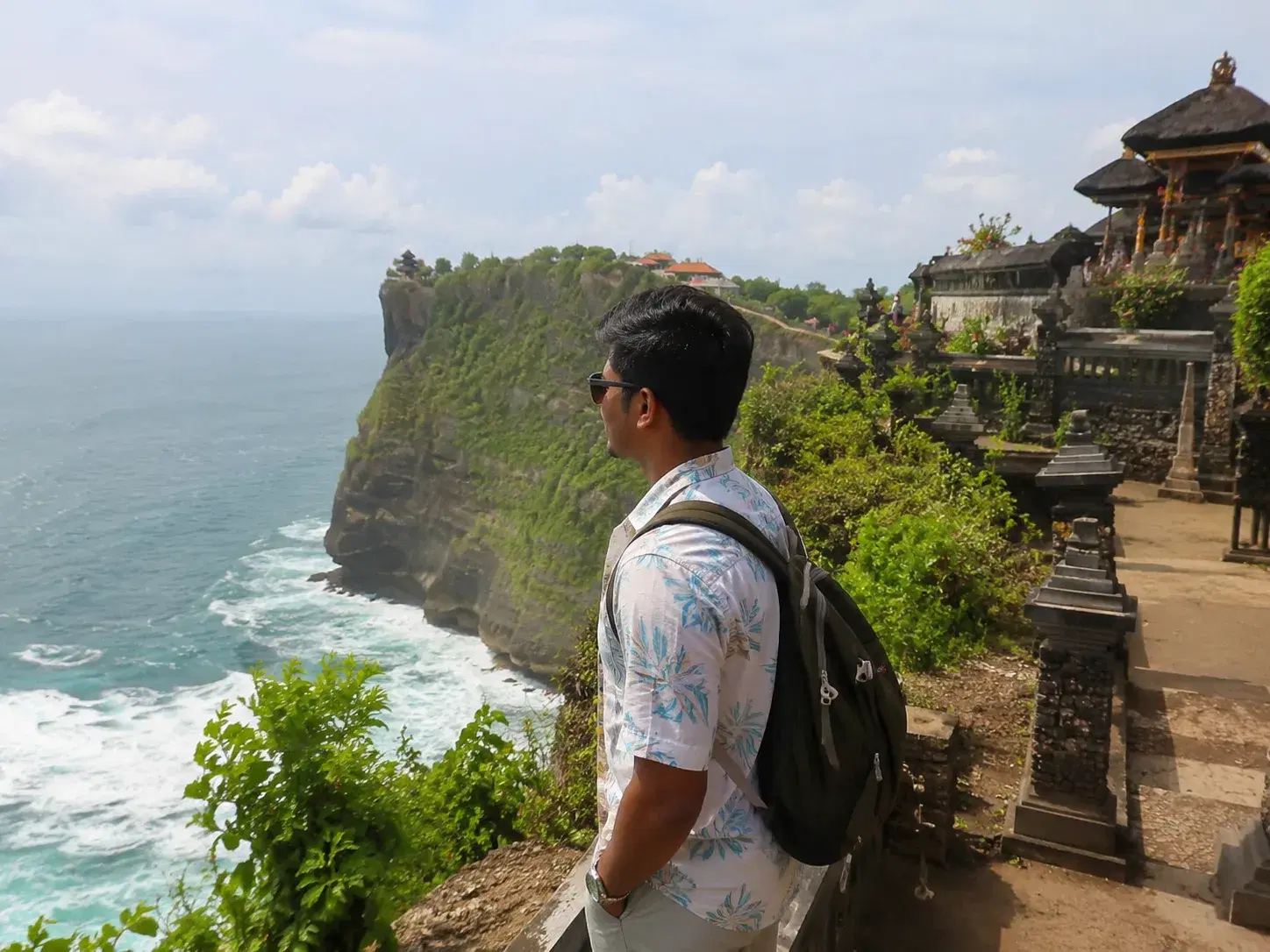
Nusa Dua is a resort peninsula in south Bali, known for calm waters suitable for water sports. Activities available in Nusa Dua include jet skiing, parasailing, banana boat rides, and snorkelling. Uluwatu Temple is a clifftop Hindu temple in south Bali, situated 70 metres above sea level. The Kecak fire dance performance at Uluwatu runs at sunset and lasts approximately 45 minutes.
Seminyak Square and Kuta Art Market are two shopping areas in south Bali with local crafts, clothing, and souvenirs. Bali is known for traditional Balinese massage, which typically costs between USD 10 and USD 20 per hour at local spas. Day 5 is commonly kept flexible for personal preferences or optional add-ons.
Ngurah Rai International Airport handles departures to Indian cities via direct or connecting flights. Check-out from the hotel is typically at 11 AM, with airport transfers arranged by the tour operator. Travelers departing to India should reach the airport at least 3 hours before international flight time.
Indian travelers visiting Bali receive a visa on arrival at Ngurah Rai International Airport. The visa on arrival costs USD 35, is valid for 30 days, and can be extended once for an additional 30 days. No prior application or embassy visit is required for Indian passport holders.
Visa on arrival for Bali is available to Indian passport holders under Indonesia's approved nationality list. The fee of USD 35 is payable in cash at the visa counter before immigration. Travelers must carry a valid Indian passport with at least 6 months of remaining validity. A return or onward flight ticket is required at the immigration counter.
The visa on arrival process at Ngurah Rai Airport takes approximately 20 to 40 minutes depending on queue length. Dedicated fast-track counters are available at the airport for an additional fee. Indian travelers do not need to apply in advance through the Indonesian embassy for stays under 30 days.
A Bali trip from India starts at approximately ₹45,000 per person for a 5-night 6-day package. This entry-level price typically includes return flights, hotel accommodation, airport transfers, and some sightseeing. Costs vary based on departure city, hotel category, and travel season.
Package Type | Hotel Category | Inclusions | Approximate Cost Per Person (INR) — Departing India |
|---|---|---|---|
Budget | 3-star | Return flights, hotel, airport transfers | ₹45,000 – ₹55,000 |
Standard | 4-star | Return flights, hotel, transfers, daily breakfast, 2–3 sightseeing tours | ₹60,000 – ₹80,000 |
Premium | 5-star / villa | Return flights, villa or resort stay, private transfers, guided tours, some meals | ₹95,000 – ₹1,40,000 |
Flight costs from India to Bali vary by departure city. Flights from Mumbai and Delhi to Bali typically cost between ₹18,000 and ₹30,000 return per person, depending on the airline and booking window. Flights from Bangalore, Chennai, Hyderabad, and Kolkata follow a similar range with one-stop connections via Singapore or Kuala Lumpur. Booking 60 to 90 days in advance generally secures lower airfares.
Hotel costs in Bali vary significantly by zone. Seminyak and Kuta offer 3-star hotels from USD 30 to USD 60 per night. Ubud resorts with rice terrace views typically start at USD 60 per night for a 4-star property. Nusa Dua 5-star resorts start at USD 120 per night. These rates apply during the shoulder season; July and August rates are 25 to 35 percent higher.
Indian travelers should choose their Bali base based on trip priority. Seminyak suits beach and nightlife-focused travelers. Ubud suits those prioritising nature, temples, and culture. Nusa Dua suits families and couples seeking resort-style stays with calm beaches and water sports access.
Seminyak is a coastal neighbourhood in south Bali, approximately 6 km from Kuta. Seminyak contains a high concentration of restaurants, beach clubs, and boutique shops. The area is well-suited for couples and groups who want beach access combined with dining options. Most budget and mid-range Bali packages from India use Seminyak or nearby Kuta as the base.
Ubud, the highland town referenced earlier in this guide, is 35 km from south Bali's beach areas. Ubud is the preferred base for travelers interested in rice terrace walks, traditional dance performances, and art galleries. The drive between Ubud and south Bali takes approximately 60 to 90 minutes by private car.
Nusa Dua is a gated resort zone in south Bali, approximately 14 km from Ngurah Rai Airport. Nusa Dua is the preferred area for families with children and honeymooners seeking quieter beaches. The zone contains several international resort brands and a dedicated water sports beach. Families departing from Chennai, Hyderabad, or Pune often select Nusa Dua for its calm sea conditions.
The top activities in Bali for Indian travelers include visiting Tanah Lot and Uluwatu temples, walking the Tegallalang Rice Terrace in Ubud, watching the Kecak fire dance at sunset, doing water sports in Nusa Dua, and shopping at Seminyak or Kuta markets.
Tanah Lot Temple, described earlier in this guide, is one of Bali's most visited religious sites. Tanah Lot is accessible from Seminyak in under an hour and is free to view from the surrounding area. Entry to the temple complex costs approximately IDR 60,000 per person. The temple is most visited between 5 PM and 7 PM for sunset views.
The Tegallalang Rice Terrace is a UNESCO-recognised agricultural site in Ubud, featuring stepped paddy fields dating back to the 9th century. Entry to the Tegallalang viewing area costs approximately IDR 50,000 per person. The terrace is best visited in the morning before 10 AM to avoid midday heat. Guided Ubud day tours from south Bali typically include Tegallalang as a standard stop.
Water sports in Nusa Dua are available through licensed operators on the beach. Common activities include parasailing, jet skiing, banana boat rides, and glass-bottom boat tours. Prices for individual activities range from USD 15 to USD 40 per person. Most Bali packages from India include a half-day water sports session in Nusa Dua as an optional add-on.
The Kecak fire dance at Uluwatu Temple is a traditional Balinese performance depicting scenes from the Ramayana. The performance runs daily at sunset, approximately 6 PM, and lasts 45 minutes. Entry tickets cost approximately IDR 150,000 per person. Indian travelers familiar with the Ramayana narrative often find this performance particularly engaging.
Indian travelers reach Bali via Ngurah Rai International Airport, with flights available from Mumbai, Delhi, Bangalore, Chennai, Hyderabad, and Kolkata. Most routes involve one stop via Singapore, Kuala Lumpur, or Colombo. Total travel time from India ranges from 7 to 12 hours depending on the departure city and layover duration.
Flights from Mumbai to Bali take approximately 7 to 9 hours with one stop. Flights from Delhi to Bali take approximately 9 to 11 hours with one stop. Flights from Bangalore, Chennai, and Hyderabad to Bali take 8 to 10 hours with one connection. Flights from Kolkata to Bali take approximately 9 to 12 hours depending on the routing.
The most common connecting hubs for India-to-Bali flights are Singapore Changi Airport and Kuala Lumpur International Airport. Singapore Changi Airport is a transit hub with layovers typically between 1.5 and 4 hours. Kuala Lumpur International Airport handles a high volume of India-Bali connections, particularly from south Indian cities. Booking connecting flights with a minimum layover of 90 minutes is advisable to allow for transit time.
Indian travelers visiting Bali should pack lightweight cotton or linen clothing for the tropical climate, a sarong for temple entry, sunscreen with SPF 50 or higher, insect repellent, and comfortable walking shoes for rice terrace and temple visits. A travel adapter for Type C or Type F sockets is also needed.
Bali's climate is tropical, with temperatures between 26°C and 32°C year-round. Light, breathable clothing is suitable for most activities. Temples in Bali require covered shoulders and a sarong below the waist. Sarongs are available for rent or purchase at temple entrances, but carrying one avoids the rental fee.
Indonesia uses Type C and Type F electrical sockets with a 230V supply. Indian travelers carrying Type D or Type M plugs will need a universal travel adapter. Sunscreen is significantly more expensive in Bali than in India, so carrying a sufficient supply from home reduces costs. Insect repellent is advisable for evening outdoor activities, particularly in Ubud.
Indian travelers most commonly ask about visa requirements, the best time to travel, what is included in a Bali package, how safe Bali is, whether vegetarian food is available, and how to customise an itinerary for a honeymoon, family trip, or group departure from their city.
Bali is generally considered safe for Indian travelers. The island has a well-established tourism infrastructure. Standard precautions apply — avoid unlicensed taxis, keep valuables secure, and use hotel-recommended or app-based transport services.
Vegetarian food is available in Bali, particularly in Ubud and Seminyak. Many restaurants in tourist areas offer Indian vegetarian dishes. Ubud has a concentration of plant-based and vegetarian cafes. Indian travelers with strict vegetarian requirements should confirm meal options with their tour operator before departure.
Bali honeymoon packages from India can be customised to include private villa stays, couples spa sessions, candlelit dinners, and sunset boat cruises. Ubud and Seminyak are the most popular zones for honeymoon stays. Tripstor builds honeymoon-specific Bali itineraries for departures from all major Indian cities, with pricing starting above the standard ₹45,000 base rate.
Bali uses the Indonesian Rupiah (IDR) as its official currency. Indian travelers should carry USD cash to exchange at authorised money changers in Bali, as USD-to-IDR rates are more favourable than INR-to-IDR rates. ATMs in Seminyak, Kuta, and Ubud accept international debit and credit cards. Carrying a forex card loaded with USD is a practical option for Indian travelers.
Personalise your trip
Choose a travel style as your starting point. We'll refine the pace, stays, experiences, and budget until the journey feels entirely yours.
Not sure which fits? Use our trip builder — it takes under two minutes.
Got questions?
Straight answers on visas, pricing, best time to visit, and how our packages work for Indian travellers.
6 questions answered below
Indian passport holders receive a visa on arrival at Bali's Ngurah Rai International Airport, valid for 30 days and extendable once for another 30 days. The fee is USD 35, payable in cash at the airport counter. Travelers must carry a return ticket and proof of sufficient funds at the immigration desk.
Social proof
Real feedback from Indian holidaymakers who booked Bali packages with Tripstor.
4.8
from 432+ reviews
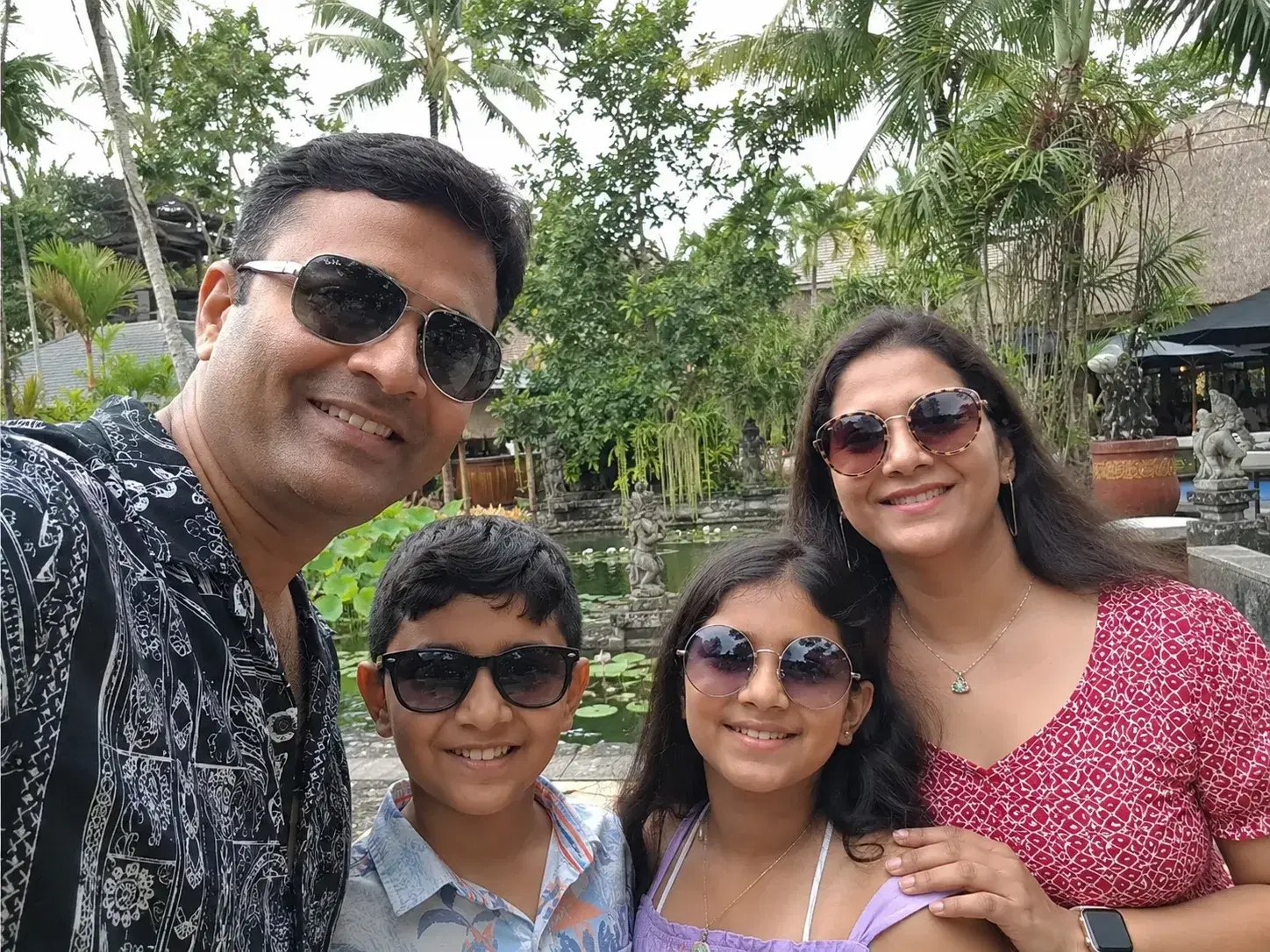
FamilyWe had a great time in Bali with our family. The beaches were beautiful and the local markets were fun to explore. Tripstor's service was excellent, making our trip enjoyable and stress-free.
CoupleOur couple trip to Bali was an incredible experience. The scenic views and romantic dinners were highlights. Thanks to Tripstor for organizing everything so well. We can't wait to go back.
FriendsBali was the perfect getaway for us friends. The nightlife was amazing and the food was delicious. Tripstor took care of all the details, making our trip hassle-free. We had an unforgettable time.
FamilyWe had a fantastic family vacation in Bali. The kids loved the water parks and we enjoyed the beautiful landscapes. Tripstor's itinerary was well-planned and allowed us to explore so much. Highly recommend it for families.
HoneymoonOur honeymoon in Bali was nothing short of magical. The beaches were stunning and the local culture was vibrant. Tripstor made everything seamless, from flights to accommodations. We couldn't have asked for a better experience.
Travel guides
Useful local context, seasonal advice, and practical planning notes for a more considered journey.