Curated starting points
Find a Japan journey that feels like yours.
Begin with a thoughtfully paced itinerary, then change the stays, experiences, route, and budget with a Tripstor specialist.
Japan is an East Asian island nation covering approximately 377,975 sq km, known for its mix of ancient temples, modern cities, and distinct seasonal landscapes. Indian travelers can visit Japan on an e-visa, which is processed online before departure. A standard Japan trip from India runs 7 nights and 8 days, covering cities like Tokyo, Kyoto, and Osaka. Packages for Indian travelers start at ₹1,35,000 per person, depending on the season and inclusions.
The best time to visit Japan from India is March to May for cherry blossoms, or October to November for autumn foliage. Both seasons offer comfortable temperatures and clear skies for sightseeing. Japan suits couples, families, and solo travelers equally well. The country has good public transport, English signage in major cities, and a wide range of vegetarian and Jain food options in tourist areas. Tripstor offers fixed departures and custom Japan itineraries for travelers from Mumbai, Delhi, Bangalore, and other Indian cities.
Curated starting points
Begin with a thoughtfully paced itinerary, then change the stays, experiences, route, and budget with a Tripstor specialist.
Starting from
₹1,35,000/ person
Depart from India
Explore thoughtfully planned routes with flights, stays, and experiences shaped around your departure city.
Destination guide
Practical context, local highlights, and honest planning advice — written for travellers from India.
Your field notes
A considered guide to Japan
The best time to visit Japan from India is March to May or October to November. March to May brings cherry blossom season across Tokyo and Kyoto. October to November offers cooler temperatures and autumn foliage across most regions. Both windows suit Indian travelers well.
Japan's cherry blossom season, locally called Sakura, runs from late March to mid-April and draws the highest tourist footfall of the year. Kyoto's Maruyama Park and Tokyo's Ueno Park are two of the most visited spots during this period. Temperatures during March to May range from 10°C to 22°C across most cities, which Indian travelers from warmer cities like Chennai or Hyderabad find comfortable.
October to November is the second peak season, with daytime temperatures between 12°C and 20°C. Autumn foliage, called Koyo, turns hillsides and temple gardens red and orange from late October onward. Nikko National Park and Arashiyama Bamboo Grove in Kyoto are popular spots during this window. Both peak seasons require early booking, as hotel availability tightens 3 to 4 months in advance.
Month | Season | Average Temperature Range (°C) | Crowd Level | Accommodation + Flight Price Premium vs. Off-Season Baseline |
|---|---|---|---|---|
March – May | Spring / Cherry Blossom | 10°C – 22°C | Very High | 20% – 35% higher |
June – August | Summer / Rainy Season | 25°C – 35°C | Moderate | Baseline |
October – November | Autumn / Koyo | 12°C – 20°C | High | 15% – 25% higher |
December – February | Winter | 0°C – 10°C | Low to Moderate | Baseline to 10% lower |
A standard 7-night 8-day Japan itinerary from India covers Tokyo, a day trip to Nikko or Hakone, Kyoto, and Osaka. The route moves from east to west using the Shinkansen bullet train. Most Indian travelers spend 3 nights in Tokyo, 2 in Kyoto, and 2 in Osaka.
The Shinkansen, Japan's high-speed rail network, connects Tokyo to Kyoto in approximately 2 hours and 15 minutes. A Japan Rail Pass, purchased before departure from India, covers most Shinkansen routes and is cost-effective for a multi-city trip. The pass is available in 7-day and 14-day durations and must be activated on arrival in Japan.
Day 1 — Arrival in Tokyo: Tokyo is Japan's capital city and the country's largest urban center, with a population of approximately 14 million in the city proper. Arrive at Narita or Haneda Airport, check into your hotel, and rest after the flight.
Day 2 — Tokyo City: Shibuya Crossing is one of the busiest pedestrian intersections in the world, located in central Tokyo. Visit Shibuya, Harajuku, and Shinjuku for a mix of street culture, shopping, and food.
Day 3 — Tokyo to Nikko or Hakone: Nikko is a UNESCO World Heritage Site located approximately 140 km north of Tokyo, known for its ornate Toshogu Shrine. Hakone is a mountain resort town 80 km southwest of Tokyo, offering views of Mount Fuji on clear days. Choose one based on your preference for temples or landscapes.
Day 4 — Shinkansen to Kyoto: The Shinkansen Hikari service covers the Tokyo-to-Kyoto route in approximately 2 hours and 40 minutes. Arrive in Kyoto, check in, and visit Fushimi Inari Shrine in the evening.
Day 5 — Kyoto Temples and Arashiyama: Kyoto served as Japan's imperial capital for over 1,000 years and contains 17 UNESCO-listed sites. Visit Kinkakuji (Golden Pavilion), Arashiyama, and Nishiki Market in a single day.
Day 6 — Day Trip to Nara: Nara is a city 45 minutes from Kyoto by train and is home to Todai-ji Temple, which houses Japan's largest bronze Buddha statue. Free-roaming deer in Nara Park are a well-known feature of the city.
Day 7 — Osaka: Osaka is Japan's third-largest city and a 15-minute Shinkansen ride from Kyoto. Visit Dotonbori for street food, Osaka Castle for history, and Den Den Town for electronics.
Day 8 — Departure: Kansai International Airport serves Osaka and connects to major Indian cities via one-stop flights. Check out, transfer to the airport, and depart.
Indian passport holders can apply for a Japan tourist visa through the e-visa system or via the Japanese consulate. The Japan e-visa application requires a valid passport, confirmed return flight, hotel bookings, bank statements, and a completed application form. Processing typically takes 5 to 7 working days.
The Japan tourist visa is a single-entry or double-entry visa valid for 15 or 30 days, depending on the application type. Indian travelers must apply through the Japanese Embassy or Consulate in their city, or through an authorized visa facilitation center. Tripstor's visa support team assists with document preparation and submission as part of the package.
Bank statements should show a minimum balance sufficient to cover daily expenses, typically around ₹5,000 to ₹8,000 per day of stay. A confirmed hotel itinerary covering all nights of the trip is a mandatory document. Visa fees for Indian applicants are approximately ₹1,200 to ₹1,500 for a single-entry tourist visa.
Valid Indian passport with at least 6 months validity beyond the travel date.
Completed Japan visa application form, signed by the applicant.
Two recent passport-size photographs meeting Japanese consulate specifications.
Confirmed return flight tickets showing entry and exit dates.
Hotel booking confirmation for all nights of the stay in Japan.
Bank statements for the last 3 months showing sufficient funds.
Income tax returns or salary slips for the last 3 months.
Leave approval letter from employer or business registration documents for self-employed applicants.
Japan tour packages from India start at ₹1,35,000 per person for a 7-night 8-day trip. This price typically includes return flights, hotel accommodation, intercity Shinkansen travel, and daily breakfast. Costs vary based on travel season, hotel category, and departure city.
Flights from Mumbai and Delhi to Tokyo or Osaka generally cost between ₹45,000 and ₹70,000 return, depending on the airline and booking window. Flights from Bangalore, Chennai, Hyderabad, and Kolkata follow similar price ranges, with minor variations based on routing. Booking flights 3 to 4 months in advance reduces costs by 15% to 25% compared to last-minute fares.
Hotel costs in Japan vary significantly by city and category. A 3-star hotel in Tokyo costs approximately ₹6,000 to ₹9,000 per night. A 4-star hotel in the same city costs ₹10,000 to ₹16,000 per night. Kyoto hotels tend to be priced 10% to 15% higher than equivalent Tokyo properties during peak season.
Travel Season | Package Price Range per Person (7N/8D, Including Flights) | Hotel Availability | Advance Booking Required |
|---|---|---|---|
March – May (Cherry Blossom) | ₹1,60,000 – ₹2,20,000 | Limited | 3 – 4 months |
June – August (Summer) | ₹1,35,000 – ₹1,65,000 | Good | 4 – 6 weeks |
October – November (Autumn) | ₹1,50,000 – ₹2,00,000 | Limited | 2 – 3 months |
December – February (Winter) | ₹1,35,000 – ₹1,55,000 | Good | 2 – 4 weeks |
Indian travelers on a first trip to Japan should prioritize Tokyo, Kyoto, and Osaka. These three cities together cover Japan's modern urban life, imperial history, and street food culture. The three-city route is well-connected by Shinkansen and fits comfortably within a 7-night itinerary.
Tokyo, as mentioned earlier, is Japan's capital and the entry point for most international flights. The city contains distinct neighborhoods, each with a different character — Shinjuku for nightlife and shopping, Asakusa for traditional temples, and Akihabara for electronics and anime culture. Tokyo Disneyland and TeamLab digital art museums are popular add-ons for families and younger travelers.
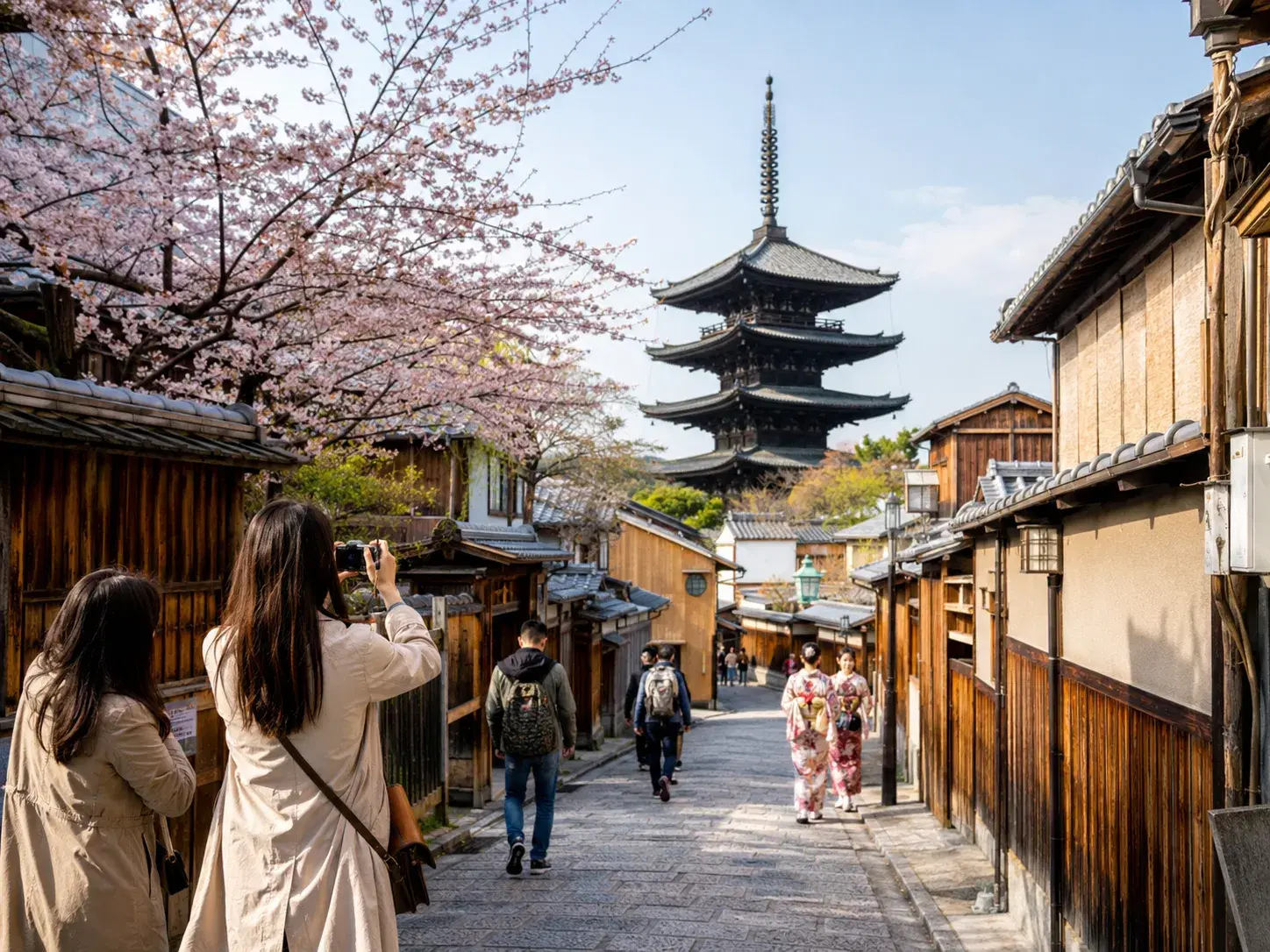
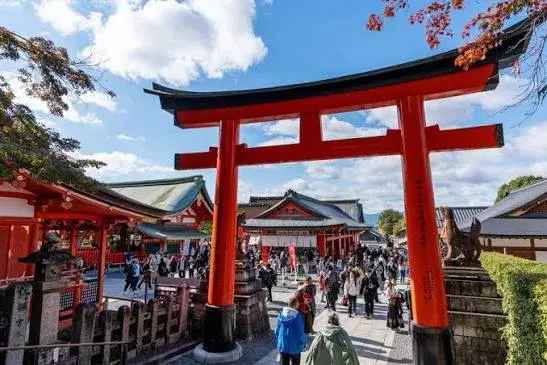
Kyoto, the former imperial capital referenced earlier in this guide, holds the highest concentration of UNESCO-listed temples and shrines in Japan. Fushimi Inari Taisha, with its thousands of red torii gates, is the most photographed site in Kyoto. The city also has a well-preserved geisha district called Gion, which is walkable from most central hotels.
Osaka is Japan's food capital by reputation, with Dotonbori canal area serving as the main hub for street food. Takoyaki (octopus balls) and Okonomiyaki (savory pancakes) are two dishes strongly associated with Osaka's food culture. The city also serves as the departure point for Kansai International Airport, making it a logical last stop before flying home.
Indian travelers in Japan should budget approximately ₹3,000 to ₹6,000 per person per day for meals and local transport. Japan has a range of vegetarian-friendly options, though pure vegetarian or vegan meals require some planning. Convenience stores like 7-Eleven and FamilyMart stock affordable, ready-to-eat meals across all cities.
Japan's convenience store chains, known locally as Konbini, stock onigiri (rice balls), sandwiches, noodles, and hot snacks at prices between ₹150 and ₹400 per item. Indian travelers who prefer vegetarian food can find options at most Buddhist temple restaurants, called Shojin Ryori restaurants, in Kyoto. Larger cities also have Indian restaurants, particularly in Tokyo's Shinjuku and Nishi-Kasai neighborhoods.
Local transport within cities is managed through IC cards like Suica or Pasmo, which work on trains, buses, and some convenience stores. An IC card costs approximately ₹1,000 as a refundable deposit and can be topped up at any station. Daily metro and bus costs within Tokyo or Osaka average ₹500 to ₹900 per person.
A Japan trip suits Indian travelers who want a mix of city exploration, cultural sites, and organized travel. Japan works well for couples, families with older children, solo travelers, and small groups. The country's public transport system is reliable, making independent travel manageable even without a guide.
Couples traveling to Japan for a honeymoon or anniversary trip often choose the spring season for cherry blossoms and opt for ryokan stays. A ryokan is a traditional Japanese inn offering tatami-mat rooms, yukata robes, and multi-course kaiseki dinners. Ryokan stays in Kyoto or Hakone add a distinct cultural element to a standard city-focused itinerary.
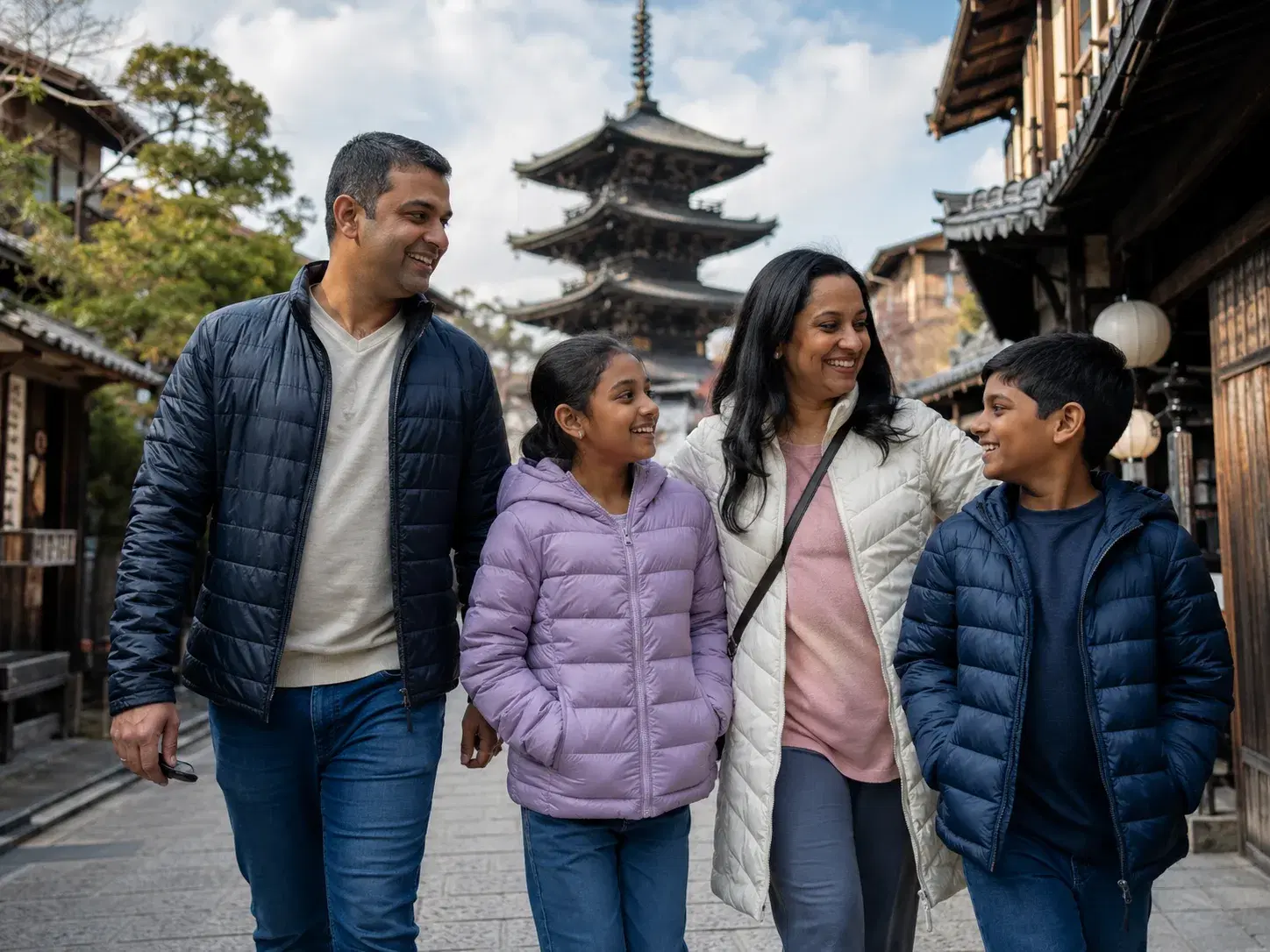
Families with children benefit from Japan's high safety standards, clean public spaces, and child-friendly attractions. Tokyo Disneyland, the Ghibli Museum in Mitaka, and the teamLab Planets digital art space in Toyosu are popular family stops. Japan's low crime rate and well-marked public signage in English make it one of the more manageable long-haul destinations for first-time international travelers from India.
Solo travelers find Japan particularly accessible due to single-occupancy hotel rooms being widely available and reasonably priced. Capsule hotels, a format unique to Japan, offer compact sleeping pods at ₹2,000 to ₹4,000 per night in central city locations. The overall safety and orderliness of Japanese cities makes solo travel comfortable for both men and women.
Personalise your trip
Choose a travel style as your starting point. We'll refine the pace, stays, experiences, and budget until the journey feels entirely yours.
Not sure which fits? Use our trip builder — it takes under two minutes.
Got questions?
Straight answers on visas, pricing, best time to visit, and how our packages work for Indian travellers.
6 questions answered below
Indian passport holders require a visa to enter Japan. Japan does not offer visa-on-arrival for Indian nationals. The Japan tourist visa is a sticker visa applied through the Japanese consulate or authorised visa application centres in cities like Mumbai, Delhi, Bangalore, Chennai, and Kolkata. Processing typically takes 5–7 working days after document submission.
Social proof
Real feedback from Indian holidaymakers who booked Japan packages with Tripstor.
4.8
from 432+ reviews
CoupleOur Japan trip was well planned from start to finish.